 Snorkeling Tours Zanzibar
Mnemba Island, Zanzibar: What You Get for Your $55
 By Salim Haji · Zanzibar-based snorkeling guide · Updated August 2026
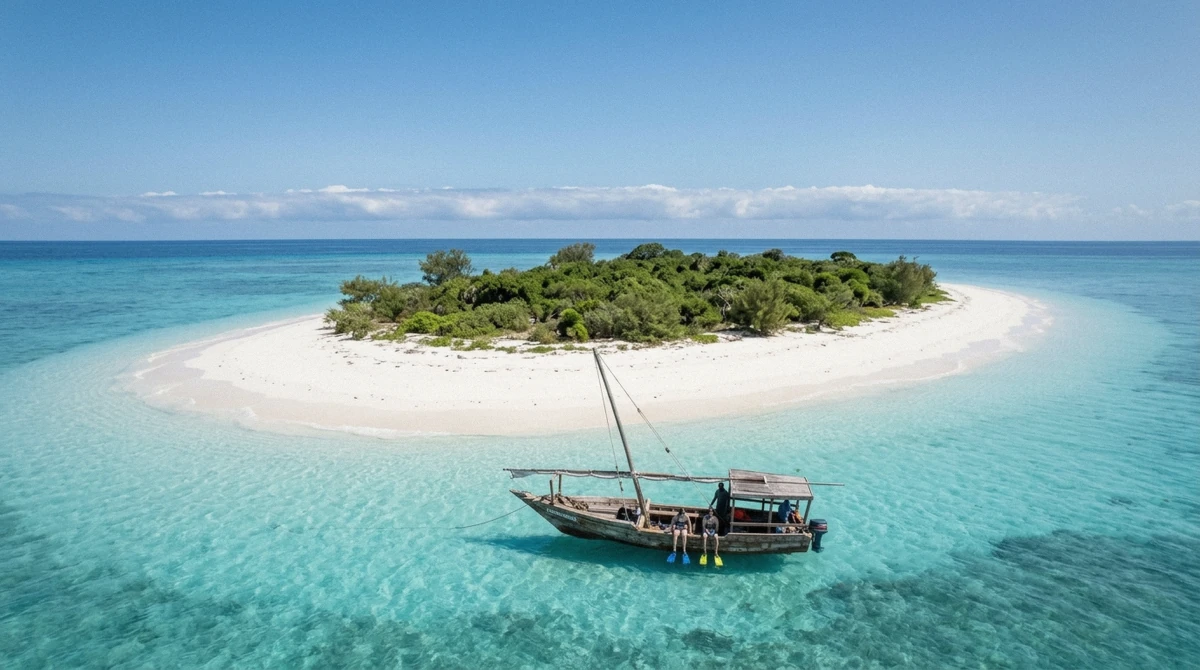
Guests board my boat expecting to spend the afternoon on Mnemba Island, and I have to tell them before we leave the beach that nobody is landing anywhere. Mnemba is private property with a 500-metre exclusion zone around it. What you are buying is the reef that rings it, which happens to be the best easy snorkeling in Zanzibar, and the boat that gets you there. Every rated boat that goes is on our Zanzibar snorkeling tours comparison.
Quick answer
Mnemba Island sits 3 km off Zanzibar's northeast coast, opposite Muyuni Beach. It is privately leased and closed to day visitors, so snorkeling trips anchor on the surrounding reef instead. Half-day boats run $45 to $60 per person, plus a $25 marine park fee per adult unless the ticket includes it.
Key takeaways
- You cannot set foot on the island. A 500-metre exclusion zone keeps every non-guest on the water
- Best-reviewed way out: From Kendwa: Mnemba Boat Trip and Dolphin Snorkel Adventure, $55, 4.8★ from 1,219 travellers, park fee included
- The Mnemba Island Marine Special Area charges $25 per non-EAC adult and $10 per child, collected at the ranger post if your operator has not paid it
- The reef sits 2 to 5 metres deep and holds around 600 fish species, which is why beginners do fine here
- 20 minutes by boat from Muyuni pier, about an hour from Nungwi or Kendwa, roughly 90 minutes by road from Stone Town first
- Go on the first weekday departure. By mid-morning dozens of boats are working the same stretch of coral
Boats That Go to the Mnemba Reef
Three routes to the same conservation area at three price points. All three state that the conservation fee is inside the ticket, which is the detail worth checking before anything else.
 from $55Best Reviewed — 1,219 Reviews
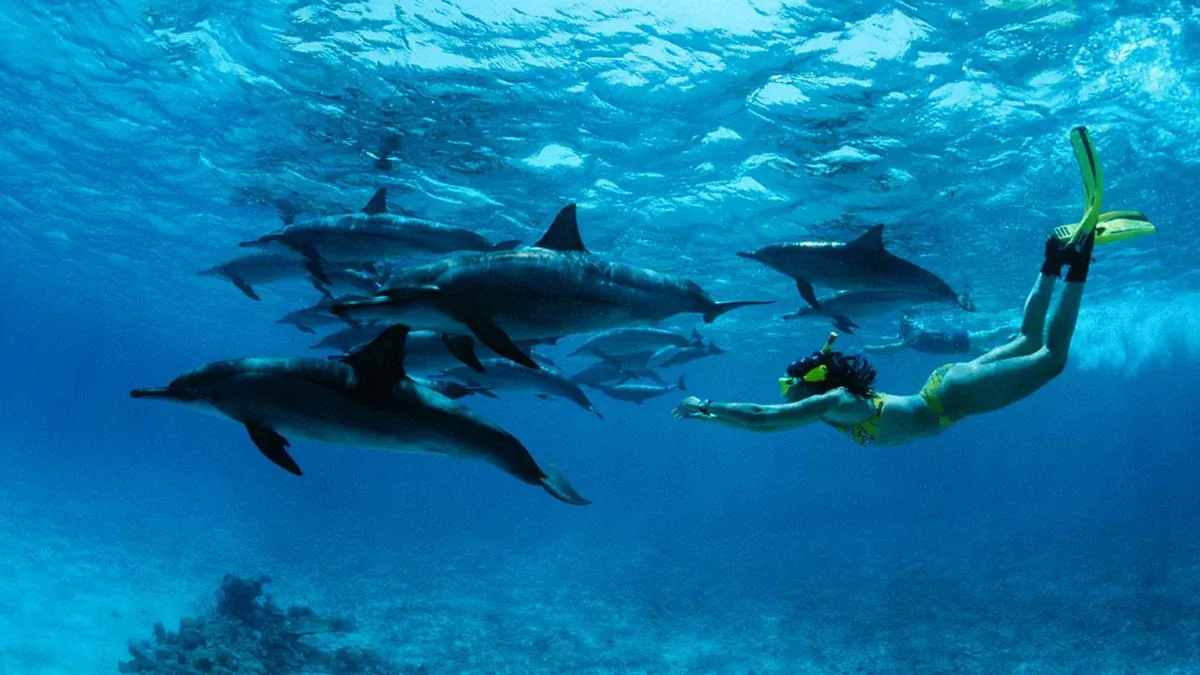
 From Kendwa: Mnemba Boat Trip and Dolphin Snorkel Adventure
- Snorkel the coral wall inside the Mnemba Atoll conservation area
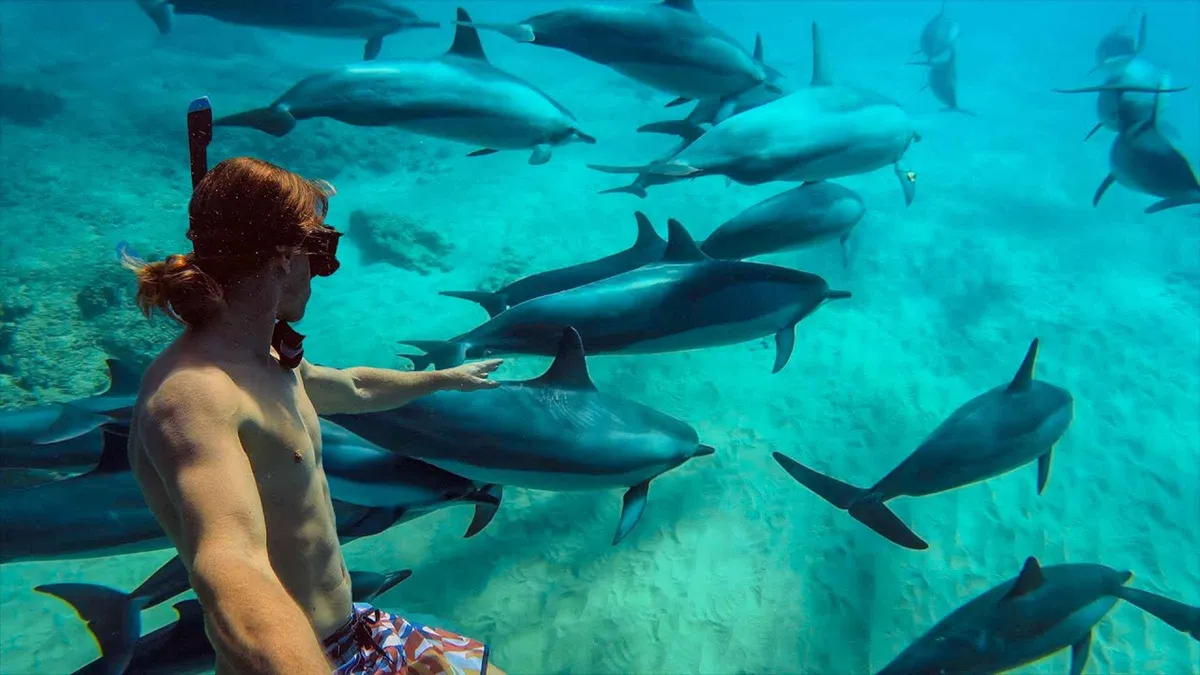
- Dolphin search along the northeast coast on the way out
- Mask, fins, snorkel and life jackets supplied on board
- Mnemba conservation fee and government taxes included in the price
 from $55Government Fee Included
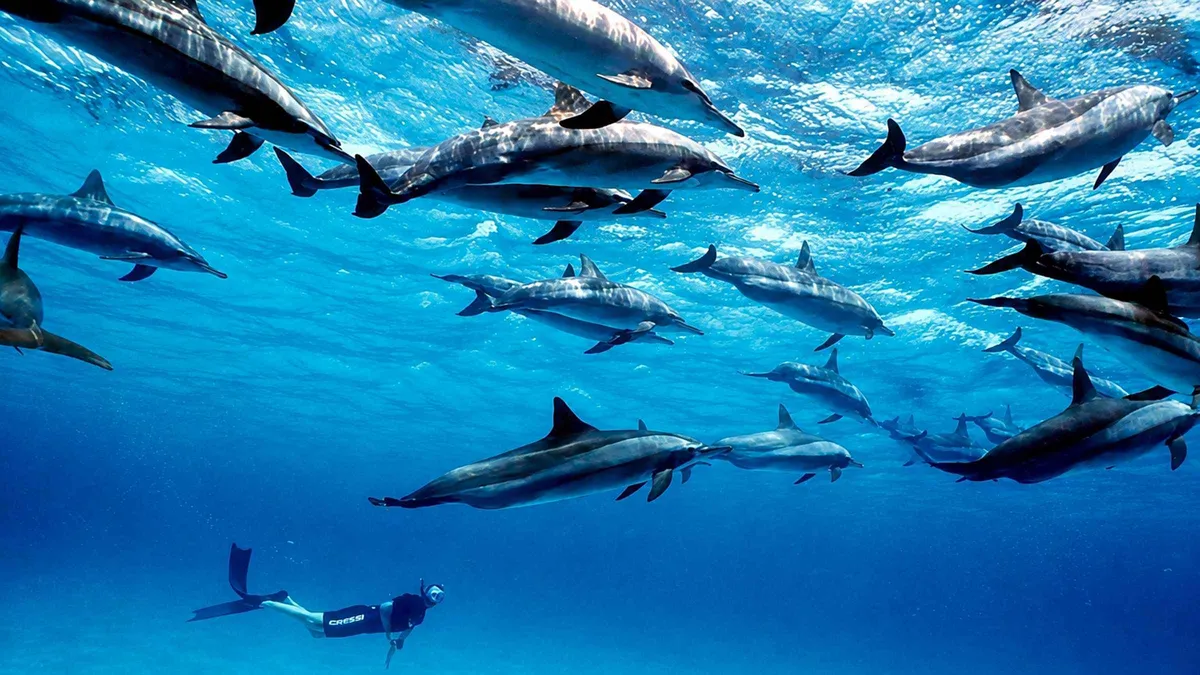
 Mnemba Island Snorkeling & Dolphin + Pickup & Government fee
- Government conservation fee built into the ticket, not collected in cash at the boat
- Hotel pickup and drop-off available as a booking option
- One-hour crossing from Nungwi village to the Mnemba reef
- Snorkel gear, bottled water and tropical fruit on board
 from $552,000 Reviews
 Mnemba: African Maldives Day Tour with Optional Lunch
- Hotel pickup and drop-off from anywhere on Zanzibar
- Boat transport to the Mnemba reef with conservation fees included
- Guide, snorkeling gear, lunch and water in the price
- Flexible 3.5 to 6.5 hour window depending on the option booked
Everything Worth Knowing Before You Book
You Are Buying the Reef, Not the Island
Mnemba Island is leased and run as a private lodge with twelve rooms. Non-guests are not permitted to land, and a 500-metre exclusion zone is enforced around the shoreline. Photographs of an empty white beach with nobody on it are accurate and irrelevant: that beach belongs to whoever paid for a room.
This catches people out constantly. A listing that says "Mnemba Island tour" with a photo of the sand is selling you a boat trip to the reef around it. That is not a scam, it is just how Mnemba works, and the good operators say so up front.
What you actually get is roughly ninety minutes to two hours on the water, split into one or two snorkel drops on the reef, with fruit and water on the boat in between. Some trips add a stop on a sandbank nearby, which is the closest you get to standing on anything.
| What people expect | What happens |
|---|---|
| Landing on the island | Not permitted, 500 m exclusion zone |
| A beach day | Boat day, with an optional sandbank stop |
| Guaranteed dolphins | A search on the way out, no guarantee |
| Turtles on the reef | Rare in the shallows, they nest on the island itself |
| A private reef | Dozens of boats by mid-morning |
The Island and Its Reef, Precisely
Mnemba lies about 3 km off the northeast coast of Unguja, the main island of Zanzibar, opposite Muyuni Beach. It is roughly triangular, around 500 metres across and 1.5 kilometres in circumference. Walking its shoreline takes under fifteen minutes, if you are one of the twelve people allowed to.
An oval reef about 7 by 4 kilometres surrounds it, and that reef is gazetted as the Mnemba Island Marine Conservation Area. Fishing is banned inside it, which is the single reason the fish life looks the way it does.
One pedantic note that matters if you are reading operator listings: this is not an atoll. An atoll encircles a lagoon, and Mnemba does not. Half the industry calls it Mnemba Atoll anyway, so you will see both names on the same booking page for the same trip.
What Lives There
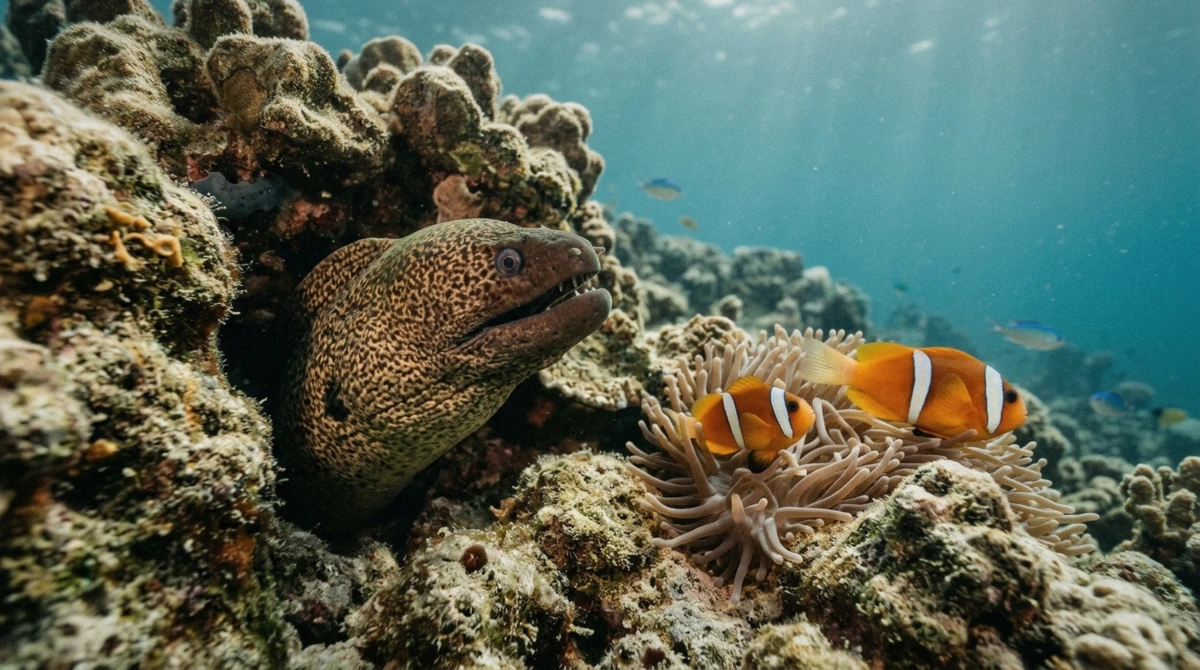
Around 600 species of coral reef fish have been recorded in the conservation area. Snorkeling the shallow wall you will see sergeant majors in numbers around the boats, snappers, surgeonfish, moray eels hiding in the coral, and clownfish in their anemones.
Three species of dolphin use these waters, which is why every trip runs a search on the way out. Green sea turtles nest on the island's beaches between February and September, protected by a monitoring programme that has run since 1996. Seeing one in the water while snorkeling is luck, not itinerary.
The reef sits roughly 2 to 5 metres below the surface. That depth is the whole reason Mnemba became the default first snorkel in Zanzibar: you float, you look down, and the coral is close enough to see properly without diving.
The $25 Fee and Who Collects It
Entry to the Mnemba Island Marine Special Area costs $25 per non-EAC adult and $10 per child. It is a real government fee, it funds the rangers, and it is not optional.
What varies is who pays it and when. Operators that fold it into the ticket price have already settled it, and the ranger boat that comes alongside is a formality. Operators that do not will collect $25 in cash from you at sea, which is a bad moment to discover a price you did not budget for, and the boats arranged informally on the beach sometimes avoid the ranger post entirely by anchoring somewhere that is not the conservation area at all.
When a Mnemba trip is quoted at $30, this is the gap it is hiding.
The other conservation areas around Zanzibar, Menai Bay, Changuu-Bawe, Chumbe and the Pemba Channel, went from $3 to $10 per non-EAC adult per day on 1 September 2025. Mnemba's $25 was left unchanged.
How Long It Takes From Your Hotel
The crossing is short. The road is not. Where you are staying decides whether Mnemba is a lazy morning or half a day in a minibus.
| Base | To the water | Boat crossing |
|---|---|---|
| Matemwe | 10–15 min to Muyuni pier | About 20 min |
| Nungwi / Kendwa | On the beach | About 1 hour |
| Kiwengwa / Pwani Mchangani | 30–40 min | 20–30 min |
| Paje / Jambiani | 60–75 min | 20–30 min |
| Stone Town | About 90 min | About 20 min |
Timing: The Only Advice That Changes Your Day
Boats leave from several points along the coast through the morning and end up in the same few hundred metres of water. On the first departure the reef is quiet. Two hours later there can be twenty boats stacked along the same wall, snorkelers in the water between them, and the fish behave accordingly.
Book the earliest slot, and book a weekday. Saturdays, Sundays and holidays roughly double the traffic.
Seasonally, conditions are calmest with the best visibility in November and March, when the wind between the two monsoons drops. The broader good windows for snorkeling anywhere in Zanzibar are June to October and December to February. April and May are the long rains and operators cancel.
Picking an Operator Without Getting Burned
The reef is fixed. The boat is the variable, and it is where the money either works or does not.
Multiple travellers report cheap operators anchoring over a dead patch inside the atoll rather than the living wall, on the correct assumption that a first-time snorkeler cannot tell the difference. Others cut the dolphin search short, skip the ranger post, or run a boat with one set of fins for six people.
- Ask whether the $25 conservation fee is inside the price, and get the answer before you pay
- Book something with a public review history rather than a price agreed on the beach
- Take the first departure of the day, on a weekday
- Check that gear and life jackets are on the boat, not rented separately at the shore
- Bring your own mask if you have one. Rental masks here range from fine to unusable
- Agree the dolphin policy: a good skipper keeps distance and does not chase
Snorkeling or Diving: Which Mnemba You Are Buying
Mnemba sells two different days under one name, and the listings rarely separate them.
The snorkeling trip works the shallow shoulder of the reef, roughly 2 to 5 metres down, where the light is strongest and the fish are densest. You float, you look down, and you need no qualification and no experience beyond being comfortable in open water. This is what almost every $45 to $60 boat is selling.
The dive trip drops over the same reef and continues down the wall, where the structure opens out and the larger animals move through. Divers see more of the reef's architecture and considerably less of its sunlight. A single dive with gear costs several times a snorkel seat, and dive boats leave from the same beaches at the same hour.
If you are choosing: the snorkeling at Mnemba is genuinely good because of that shallow shelf, which is unusual. Plenty of world-class dive sites are poor snorkeling because everything worth seeing sits at twenty metres. Here it does not. A confident snorkeler is not getting a consolation prize.
The Four Habitats Inside the Reserve
The conservation area is not one reef. It protects four distinct habitats, and knowing which one you are floating over explains what you are looking at.
The coral reef itself is the headline: hard coral formations on the shallow shelf running into a wall, holding the sergeant majors, snappers, surgeonfish, moray eels and clownfish that fill everyone's photographs.
Seagrass beds sit between the reef and the island. They look like nothing from the surface and they are the reason turtles are in the area at all. Snorkelers usually pass over them without a glance on the way to the coral.
The island's beaches are a nesting site for threatened green sea turtles, monitored and protected since 1996. Nesting runs February to September, and it happens on sand you are not permitted to walk on, which is exactly why it still happens.
And the island's vegetation supports migratory and resident shore birds that feed and roost there. You will see them from the boat, working the tide line on a beach you cannot land on.
Mnemba Against the Other Zanzibar Reefs
Mnemba is the default because it is easy, close to the beach hotels and shallow. It is not the best coral in Zanzibar, and it is nowhere near the quietest. Here is the honest ranking on the terms that matter.
| Spot | Coral quality | Boats | Cost | Easy to arrange |
|---|---|---|---|---|
| Mnemba | Good, worn in places | Heavy from mid-morning | $45–60 + $25 fee | Daily, every north-coast hotel |
| Tumbatu | Better than Mnemba | Few | Under $15 local, $71 organised | Ask on Nungwi beach |
| Chumbe | Best in Zanzibar | Capped, very light | ~$120 + $25 levy | Book days ahead, often full |
| Menai Bay | Decent | Moderate | $70–100 full day | Daily from Fumba |
| Changuu | Modest | Heavy mornings | $15–25 + boat | Daily from Stone Town |
What the Morning Actually Feels Like
Pickup is between seven and eight, and the minibus collects other guests on the way, so the first forty minutes are a tour of hotel driveways. At the beach the crew fits masks and fins on the sand and gives a briefing that is short because the water is calm.
The boats are open wooden vessels with a canvas roof at best. There is no toilet. On a windy morning the crossing takes spray over the bow, and there is nowhere dry for a phone unless you brought a dry bag.
The dolphin search happens on the way out and it is the part most likely to disappoint or to make the trip. When a pod is found and the skipper holds distance, people talk about it for years. When six boats converge and start cutting across the pod, it is unpleasant to watch and the animals leave.
Then two snorkel drops of roughly forty-five minutes each, split by fruit and water on the deck. Some trips add fifteen or twenty minutes on a sandbank, which is the part guests most often wish were longer. You are back on the beach by half past twelve.
Mnemba With Children
The shallow reef and the calm water make Mnemba one of the better first snorkels for a child who can swim, and every boat carries life jackets. The marine park fee for children is $10 rather than $25.
The honest constraints are the boat, not the reef. Shared trips run four to five hours with an open crossing of up to an hour each way, no toilet, and full sun. Several operators set a minimum age of around ten on shared boats and will take younger children only on a private charter, which is worth the money if you have a six-year-old and a fixed idea about the day.
What works: the earliest departure, a private boat if the budget allows, a rash guard rather than repeated sunscreen, and a mask that actually fits, which for a child usually means bringing one.
Month by Month on the Mnemba Reef
Water temperature never becomes the deciding factor here. Wind and rain do.
| Months | Conditions | Verdict |
|---|---|---|
| December – February | Hot, bright, warm water near 29°C | Good, busy over the holidays |
| March | Wind drops between monsoons, best visibility | Excellent, quietest of the good months |
| April – May | Long rains, rough seas, poor visibility | Avoid, many operators stop |
| June – October | Dry season, calm, visibility 20–30 m | Best overall window |
| November | Short rains, but calm water and high visibility | Good, with a weather risk |
Where to Stay for Easy Mnemba Access
The reef does not move, but your transfer time does, and on a four-hour trip a ninety-minute drive each way changes the whole day.
Matemwe is the closest base, ten to fifteen minutes from Muyuni pier and a twenty-minute crossing after that. It is quiet, low-rise and short on nightlife, which suits some people exactly.
Nungwi and Kendwa on the northern tip are the busiest beach scene on the island, with the most operators, the most competition on price and the deepest water at low tide, which also makes Nungwi the one reliable walk-in snorkel. The trade-off is an hour on the boat each way to Mnemba.
Kiwengwa and Pwani Mchangani sit between the two, thirty to forty minutes from the northeast departure points.
Stone Town is the wrong base for Mnemba specifically. Ninety minutes by road before you even see the boat makes it a full day for a half-day trip. From Stone Town, Changuu, the Nakupenda sandbank and the Fumba dhow are all closer and better value for the time.
The Dolphin Question
Every Mnemba listing puts dolphins in the title, and how your boat behaves around them is the clearest signal of what you booked.
Three species use these waters and sightings are common on the run out to the reef. What is also common is a fleet of boats converging on one pod, cutting across its path and dropping swimmers on top of it repeatedly through the morning. The animals stop feeding and resting, and they dive as soon as anyone enters the water, which means the people who paid for the encounter mostly see a grey shape leaving.
One of the operators listed on this site states plainly in its own listing that it does not condone the behaviour of the boats around it and cannot control them. That is more honesty than most offer, and it is worth reading the fine print for exactly that kind of line.
A responsible skipper approaches slowly and from the side, never encircles a pod, keeps the engine steady, and leaves after a few minutes. You are paying for the boat for the morning: if yours starts chasing, say so. Crews respond to the person who booked, and most of them would rather not do it either.
What to Bring on the Boat
Nothing on this list is exotic and every item on it solves a problem I watch guests have.
- Your own mask if you own one. Rental masks range from acceptable to unusable, and a leaking mask ruins a reef you paid an hour of boat time to reach
- Reef-safe sunscreen brought from home, because it is close to unbuyable in Zanzibar's supermarkets
- A rash guard or long-sleeve top. Four hours on open water beats any reapplication schedule
- A dry bag. Wooden boats take spray and there is nowhere dry for a phone
- Small dollar notes for tips and for the park fee if your operator collects it at sea
- Seasickness tablets if the hour-long crossing from Nungwi or Kendwa concerns you
- Water. Boats carry some, and on a hot morning it is never as much as you want
The Fees You Pay Before You Reach the Reef
Two government charges land before the boat does, and neither is negotiable.
The first applies the moment you arrive in Zanzibar. Since 1 October 2024 every non-resident visitor, children included, must hold a travel insurance policy issued by the Zanzibar Insurance Corporation, bought online at visitzanzibar.go.tz. It costs $44 for an adult, $22 for ages three to seventeen and nothing under three, and covers up to 92 days. Your own travel insurance does not exempt you, and immigration checks it at the airport and the ferry terminal.
The second is the $25 Mnemba park fee covered above. Together they mean a couple arriving for a week of snorkeling has $138 of fixed government cost before anyone books a boat.
Neither charge is a scam and both are worth knowing about in advance rather than at a counter. The insurance in particular is the one that ends trips, because travellers who assumed their own policy was enough get stopped at the border.
How the Trip Goes Wrong
The failures repeat, and all of them are avoidable at the booking stage rather than on the water.
The cheap boat that anchors over dead coral. A first-time snorkeler cannot tell a living wall from a bleached patch, and some operators rely on that when the good spot is crowded. A review history is the only defence.
The fee collected at sea. You agreed $30, the ranger boat arrives and $25 per person is requested in cash. Ask before you pay the deposit whether the conservation fee is inside the price.
The late departure. Book for nine and you arrive with the fleet. The reef at seven and the reef at ten are different places.
The gear that does not fit. Six people, four decent masks. Say something on the sand, not after the boat has left, because the crew can usually swap something at the beach and cannot at the reef.
And the weather. April and May the trips are cancelled outright, and in the windy months a crossing that looked calm from the beach is not calm halfway across. Free cancellation up to 24 hours is standard on the rated listings, so a forecast that turns is not money lost.
Making a Day of It
A Mnemba trip finishes at lunchtime, which leaves the afternoon open, and the north coast rewards not driving anywhere.
From Nungwi or Kendwa the reef at Nungwi is a walk-in snorkel with your own gear, free, and the water stays deep enough through the tide cycle. A handful of operators there also run night snorkeling over bioluminescent plankton, which is the strangest hour you will spend in the water in Zanzibar.
From Matemwe the afternoon is the beach, and that is the point of Matemwe.
If you want two reefs in a day rather than one, the alternative is skipping Mnemba's crowds entirely and taking a boat from Nungwi to Tumbatu, where the coral is healthier and there is nobody there. It costs under $15 arranged locally, or $71 organised with a guide, gear and a dolphin search included.
Staying on Mnemba Island
The island holds one lodge, run by andBeyond, with eleven bandas and one family banda. It is expensive in the way private islands are expensive, and it is the only way to walk on Mnemba legally.
Honest framing, since this site sells snorkeling and not rooms: reviewers who have stayed describe a small, basic island where the ocean is the facility. No pool, no gym, no air conditioning, no doors in the conventional sense, and a steady parade of day boats visible from the beach loungers. The reef, the dolphins and the turtle nesting are the reasons to be there. We take no commission on the lodge and do not book it, so if that is what you want, go direct.
Mnemba and the Beaches That Reach It
The island and the departure points, with the crossing time from each.
Mnemba Island: Questions Travellers Ask
Is Mnemba Island worth visiting?
The reef is worth it once. Water at 2 to 5 metres, around 600 fish species and no fishing inside the conservation area make it the easiest good snorkeling in Zanzibar, and beginners manage it comfortably. Set your expectation correctly: you are on a boat over a reef, not on the island, and by mid-morning you are sharing that reef with a fleet. Take the first weekday departure and it holds up. If you have already done it and found it crowded, Tumbatu has healthier coral with a fraction of the boats.
Who does Mnemba Island belong to?
The island is leased and operated as a private lodge by andBeyond, with twelve rooms. The surrounding reef is not private: it is the Mnemba Island Marine Conservation Area, managed through a framework involving government authorities, local communities and conservation organisations, and funded partly by the $25 per adult entry fee that snorkelers pay.
Can you go to Mnemba Island without staying there?
No. Non-guests are not permitted to land, and a 500-metre exclusion zone surrounds the island. Every snorkeling and diving trip sold as a "Mnemba Island tour" anchors on the reef offshore. Any operator promising you time on the beach is either misdescribing the trip or planning to drop you on a sandbank elsewhere.
How much does it cost to snorkel at Mnemba?
Half-day boats run $45 to $60 per person. On top of that the Mnemba Island Marine Special Area charges $25 per non-EAC adult and $10 per child, so check whether your ticket includes it. Budget $3 to $5 per person in tips for the crew, and $5 to $10 if you need to rent gear. The rated trips on this page run $55 with the fee already inside the price.
When is the best time to snorkel at Mnemba Island?
Conditions are calmest and visibility is highest in November and March, when the wind drops between the monsoons. The wider good seasons are June to October and December to February. Avoid April and May, the long rains, when visibility collapses and many operators stop running. Whatever the month, the first departure of the day beats the rest of it.
Will I see dolphins and turtles at Mnemba?
Dolphins, often. Three species use these waters and most trips search on the way out, though nothing is guaranteed and a boat that starts chasing a pod should be told to stop. Turtles, rarely. Green sea turtles nest on the island's beaches between February and September, but sightings in the shallow water where you snorkel are luck rather than a feature of the trip.
What should I be careful of at Mnemba?
Three things. A price that looks too good usually excludes the $25 park fee or skips the ranger post entirely. Some operators anchor over dead coral rather than the living wall, betting you cannot tell. And the sun on an open wooden boat at midday is stronger than it feels, so a rash guard beats reapplying sunscreen. On the reef: do not stand on coral, do not touch anything, do not chase a turtle.
Is Mnemba an atoll?
Not technically. An atoll is a ring of reef encircling a lagoon, and Mnemba is a single island inside an oval reef roughly 7 by 4 kilometres, which is a different formation. The name Mnemba Atoll is used almost universally by operators and dive shops anyway, so the same trip appears under both names.
Is Zanzibar very expensive?
Snorkeling is not the expensive part. A rated half-day boat to the Mnemba reef costs $55 with the park fee inside it, and three snorkeling outings across a week come to roughly $150 to $250 per person. The fixed costs catch people instead: a $44 government travel-insurance policy every visitor must buy before arriving, the $25 Mnemba park fee if your ticket excludes it, and tips of $3 to $5 per person per half day. Accommodation covers the full range from beach guesthouses to private islands, so the budget is set by where you sleep, not by what you do.
Can you dive at Mnemba Island?
Yes, and the same beaches launch dive boats at the same hour as the snorkel trips. Divers work the wall below the shallow shelf and see more reef structure and larger animals. The unusual thing about Mnemba is that snorkelers are not getting the leftovers: the shelf sits 2 to 5 metres down, so the coral and the fish are properly visible from the surface, which is not true at most well-known dive sites.
How long do you spend in the water at Mnemba?
Typically two drops of about forty-five minutes each, separated by fruit and water on the boat, inside a trip of four to five hours door to door. The rest is the road transfer, the crossing, the dolphin search and, on some trips, fifteen to twenty minutes on a sandbank. If in-water time is what you are buying, ask the operator directly how many drops the trip makes rather than reading the total duration.
Is Mnemba suitable for children?
The reef is: shallow, calm and 2 to 5 metres deep, with life jackets on every boat, and the park fee for a child is $10 rather than $25. The boat is the limiting factor. Shared trips run four to five hours with an open crossing, no toilet and full sun, and several operators set a minimum age of about ten on shared departures while taking younger children on private charters. Take the earliest slot and bring a mask that fits.
Ready to snorkel the Mnemba reef?
Morning departures, conservation fee included, free cancellation up to 24 hours before.